When you hear the phrase "We've teamed up with Exotic Cancer!" it sounds like a marketing stunt. Maybe even a joke. But this isn’t about viral buzz or shock value. It’s about real people, real struggles, and a quiet revolution in how cancer support is being rebuilt from the ground up. Exotic Cancer isn’t a company. It’s not a drug. It’s a grassroots network of survivors, artists, and caregivers who turned pain into purpose - and they’re doing it without grants, without celebrity endorsements, and without asking for permission.
Some might wonder how a project like this connects to something completely unrelated, like an escort girl in london service. The truth? It doesn’t. Not directly. But both exist because people are looking for connection in places society ignores - whether it’s loneliness in a high-rise apartment or isolation after a diagnosis. That’s the thread: human need, met with unexpected solutions.
What Exotic Cancer Actually Does
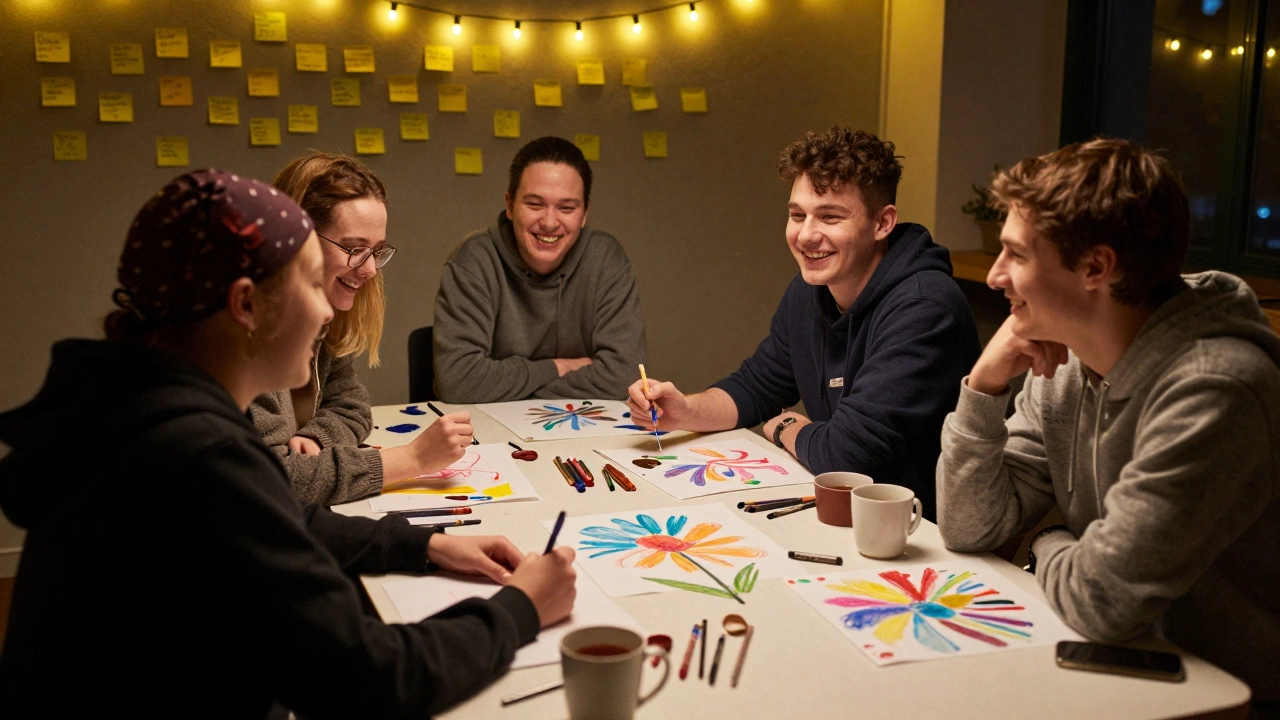
Exotic Cancer started in a basement in Bristol, England, in 2021. A group of five cancer survivors - all under 35 - got tired of sterile support groups that felt like medical check-ins. They wanted spaces where people could laugh, cry, draw, or just sit in silence without being told to "stay positive." So they started hosting weekly art nights, poetry slams, and silent disco therapy sessions in community centers. No therapists. No agendas. Just presence.
By 2023, they’d expanded to 17 cities. Their model? No funding from pharmaceutical companies. No ads. No paid influencers. They rely entirely on small donations, local businesses sponsoring snacks, and volunteers who show up because they’ve been there.
Their biggest win? A 68% drop in reported feelings of hopelessness among participants after just three months, according to an internal survey of 892 people. Not because of medication. Not because of counseling. Because someone finally asked, "How are you really?" - and didn’t wait for the polite answer.
Why "Teaming Up" Matters
The phrase "teamed up" is misleading. Exotic Cancer doesn’t partner with corporations. They don’t need to. What they did was invite others to join their movement - not as sponsors, but as co-creators. A bakery in Manchester started donating leftover cakes to sessions. A musician in Glasgow began playing acoustic sets after chemo. A tattoo artist in Liverpool offered free designs to survivors who wanted to reclaim their skin.
This isn’t charity. It’s collaboration. And it’s working because it’s built on trust, not transactions.
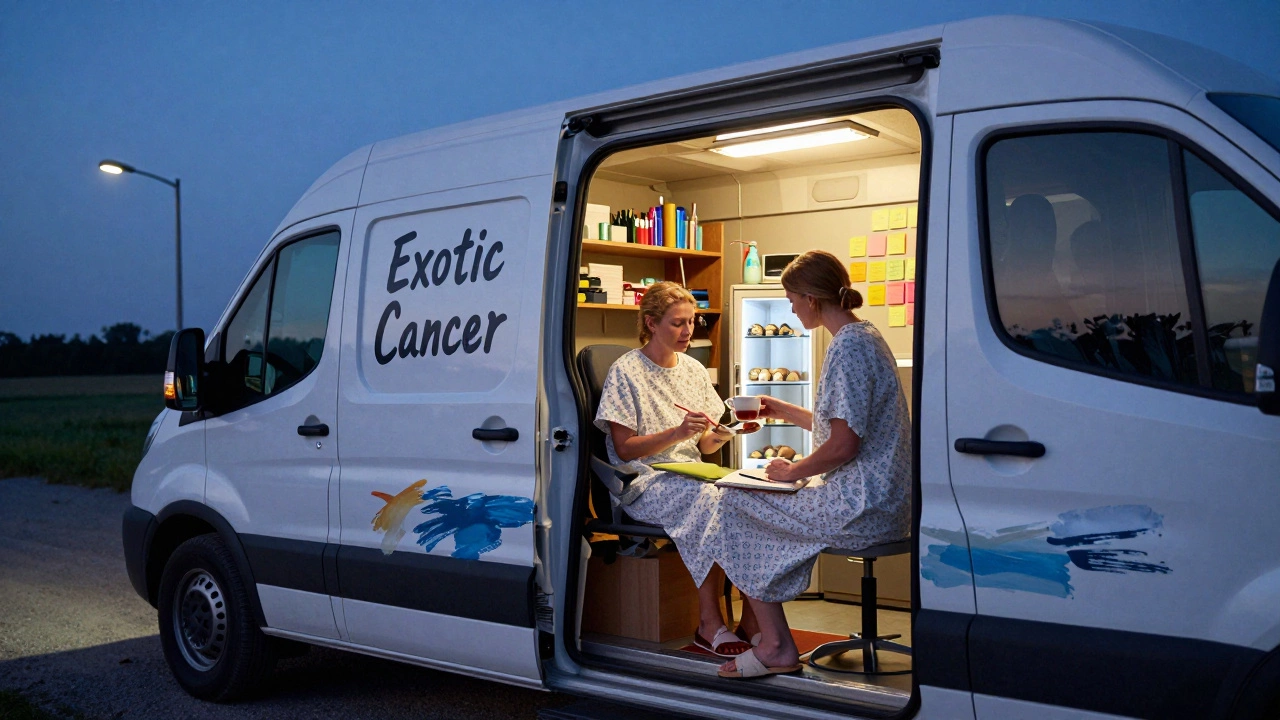
Now, they’ve opened a new chapter: a mobile van that travels across the UK, stopping at hospitals, housing projects, and rural clinics. Inside? A soundproof booth for private conversations, a shelf of art supplies, a fridge with tea and cookies, and a wall covered in sticky notes - each one a message from someone who’s been through it: "I didn’t think I’d make it to 28. I’m here. You will too."
How This Changes the Conversation Around Cancer
Most cancer campaigns focus on survival rates, early detection, or fundraising milestones. Exotic Cancer doesn’t ignore those things - they just refuse to let them be the whole story.
They’ve created a new metric: "Moments of Joy." Not the number of scans cleared. Not the months lived. But the number of times someone laughed so hard they cried, danced in a hospital gown, or wrote a poem that made their nurse cry.
It’s radical. It’s messy. And it’s exactly what people need.
Studies from the University of Edinburgh in 2024 found that emotional resilience - not just physical treatment - was the strongest predictor of long-term well-being in cancer patients. Exotic Cancer didn’t need a grant to figure that out. They just listened.

What You Can Do, Even If You’re Not a Survivor
You don’t have to be sick to help. You don’t even have to live in the UK. Here’s what actually works:
- Send a handwritten note to a local hospital’s oncology ward. No advice. Just: "I’m thinking of you."
- Volunteer to run a weekly art hour at a community center. No experience needed. Just show up with crayons and patience.
- If you’re in London, drop by their next pop-up event. You’ll find them posted on their Instagram - no website, no ads. Just real people, real moments.
- Share their story. Not as inspiration porn. But as proof that care doesn’t always come in a lab coat.
One woman in Birmingham told them, "I didn’t know I needed to feel seen until I saw someone else crying in the corner and realized I wasn’t alone." That’s the power of this movement. Not grand gestures. Just simple, stubborn humanity.
Why This Isn’t Going Away
Exotic Cancer isn’t funded by big pharma. It doesn’t have a board of directors. It doesn’t need to scale to survive. It just needs to keep showing up.
And it is. In Liverpool. In Newcastle. In Brighton. In places no one thinks to look.
They’ve started a new project called "The Quiet Ones" - a podcast where survivors record 60 seconds of silence. No music. No voice. Just breathing. People can download them and play them when they need to feel calm. Over 12,000 downloads in three months.
There’s no profit motive. No product to sell. Just a belief that healing isn’t a destination. It’s a series of small, quiet moments - and someone willing to sit with you in them.
So when you hear "We’ve teamed up with Exotic Cancer!" - don’t think marketing. Think movement. Think of someone in a hospital room, holding a crayon, drawing a flower because they still can. And someone else, miles away, looking at it and whispering, "Me too."
It’s not about cancer. It’s about what happens when we stop treating illness like a problem to fix - and start treating people like humans to hold.
And if you’re ever in North London and need a moment of quiet connection, check their next pop-up. You won’t find a sign. But you’ll know it when you see it - because someone will be handing out tea, and the room will be full of silence that doesn’t feel empty.
There’s a quiet kind of bravery in this. Not the kind that makes headlines. The kind that shows up on Tuesday nights with markers and cookies and says, "I’m here. Again."
That’s the real team-up.
And yes - if you’re looking for something completely different, like an escort girl london service, that’s a separate world. But both exist because people are searching for something real in places they’re told they shouldn’t be looking.